REVIEWS / GENERAL / OPENSCIENCE UPDATED SEP 29, 2026 · 98 SOURCES

THE PRODUCT

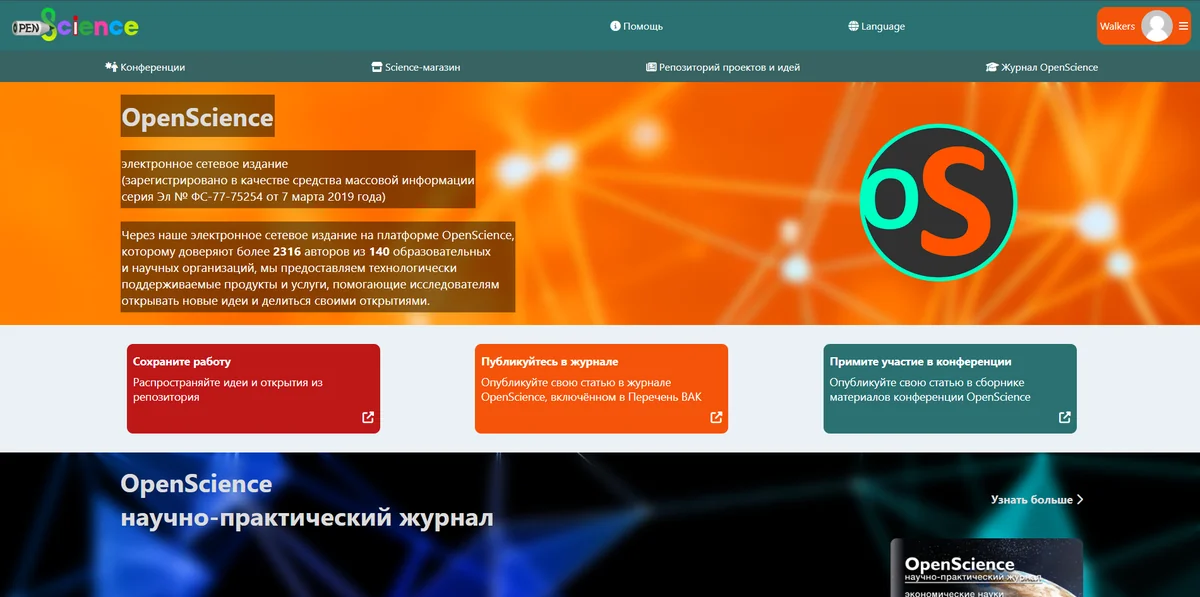
OpenScience

OpenScience

Not a product: 95 HN comments orbit Sci-Hub/IPFS backups and Elsevier outrage; 3 institutional videos cheer the concept. Tech judged immature.

GENERAL HIGH CONFIDENCE

THE VERDICT

7.2

REALITY SCORE · OUT OF 10 · CONFIDENCE HIGH

COMPOSED FROM

USERS 7.2 · 95 voices · 100%
CRITICS no published scores yet

SENTIMENT · 98 REVIEWS

+ 45% positive · 35% neutral − 20% negative

BEST PRICE TODAY

BUY ON AMAZON
Affiliate · supports independent reviews
CHECK PRICE →

// Affiliate link — score is unaffected.

●7 YOUTUBE ●75 HN ●12 LEMMY ●1 PRODUCTHUNT
USER● n=98
VIDEO● n=3
BRAND● AVAILABLE
INTERNET● n=0

AT A GLANCE · QUOTABLE

  • Rating: 7.2 / 10 (high confidence)
  • User voices: 98 across 4 platforms
  • Sentiment: 45% positive · 20% negative
  • Updated: Sep 28, 2026

GYIBB rates the OpenScience 7.2/10 based on 98 user voices from 4 platforms. Confidence: high. Source: https://gyibb.com/general/openscience

BUY IF

Free, low-barrier access to scientific papers (Sci-Hub, LibGen)

  • + Proven distribution: 77TB torrent archive already seeded by volunteers
  • + IPFS public gateways allow zero-install access to mirrors
  • + Institutional endorsement emerging (Royal Society 'first steps')

SKIP IF

Sci-Hub stopped adding new papers since ~Dec 2020 (Indian court case)

  • − Decentralized tech immature: Filecoin high entry barrier, IPFS pinning gap
  • − Not truly censorship-resistant: content-hash blacklisting under legal pressure
  • − Incumbent publishers litigate aggressively; alleged state involvement

Where the layers disagree ⚡

6 CONTRADICTIONS DETECTED

USER (HN) frames open access as grassroots archivism/piracy vs publishers; VIDEO layer presents it as top-down institutional reform led by the Royal Society — same goal, opposite protagonists.

VIDEO VS USER

ALIGNMENT: VIDEO commenter calls Sci-Hub's Elbakyan 'the Robin Hood of the academy', matching USER threads that treat Sci-Hub as the movement's working backbone.

VIDEO VS USER

USER comments warn IPFS 'bent under legal pressure' with hash blacklisting; VIDEO's only critical comment calls OSF 'a brilliant surveillance tool' — both layers distrust the infrastructure more than the idea.

VIDEO VS USER

USER comment undercuts the pure anti-publisher narrative (Elsevier is 'likely the largest OA publisher by article volume today'); VIDEO layer never acknowledges incumbent co-optation.

VIDEO VS INTERNET

USER layer debates implementation depth (torrents vs IPFS vs Filecoin, pinning economics, 77TB archives); VIDEO layer stays purely conceptual — no technical validation in either direction.

VIDEO VS USER

BRAND layer is empty, so USER accusations (Elsevier profit margins, lawsuit pressure, alleged FBI involvement) cannot be checked against any official claims.

BRAND VS USER

WHERE THEY AGREE +

+ Free, low-barrier access to scientific papers (Sci-Hub, LibGen)
+ Proven distribution: 77TB torrent archive already seeded by volunteers
+ IPFS public gateways allow zero-install access to mirrors
+ Institutional endorsement emerging (Royal Society 'first steps')

WHERE THEY DON'T −

− Sci-Hub stopped adding new papers since ~Dec 2020 (Indian court case)
− Decentralized tech immature: Filecoin high entry barrier, IPFS pinning gap
− Not truly censorship-resistant: content-hash blacklisting under legal pressure
− Incumbent publishers litigate aggressively; alleged state involvement

Where the 98 sources came from

VIEW EVERY CITATION →
YOUTUBE
7
HN
75
LEMMY
12
PRODUCTHUNT
1

The four realities of the OpenScience

Most review sites collapse everything into one number. We keep the layers separate so you can see where reality bends.

01
USER
n=98 · 4 platforms

What actual buyers say

95 HackerNews comments (top 25 by upvotes shown) form a passionate, technically literate debate around open access to scientific papers. Core threads: (1) Sci-Hub is treated as an essential archive, not a website — commenters note it can be served by any static file server, IPFS or torrents, and that 77TB LibGen torrents of Sci-Hub papers already exist, with archivists publicly requesting seeders (r/DataHoarder, r/seedboxes). Critical caveat surfaced repeatedly: Sci-Hub stopped adding new papers around December 2020, reportedly voluntarily to comply with an Indian court process, and needs development help plus a more robust live-storage solution. (2) Distribution-tech debate: torrents are the consensus 'mature' option already proven for Sci-Hub; IPFS is praised for public gateways (no client needed, usually the fastest LibGen mirror option) but criticized because unpinned files go slow or die, and — per one highly upvoted comment — it is 'not censorship-resistant' since specific content hashes can be blacklisted under legal pressure ('IPFS... quickly bent under legal pressure without even trying to fight back'). Filecoin is dismissed as a separate, immature network ('not an incentivisation layer for IPFS') with a high entry barrier ('way more than just 16GB of RAM to participate') and poor get-files-out UX. (3) Publisher anger: Elsevier and Springer Nature attract sharp criticism — 'huge profit margins of Elsevier', a relative working at Springer Nature reciting company 'talking points', and bottom-dollar outsourced proofreaders who mangle formulas, tables and grammar so articles come back as 'unreadable garbage'. Yet one high-upvote comment complicates the picture: Elsevier simultaneously made 'one of the most aggressive pushes into OA publishing' and is 'likely the largest OA publisher by article volume today', monetizing hybrid OA on top of subscriptions. (4) Structural musings: peer review is framed as the real product journals sell (Science/Nature reputations); blogs can't replace journals (not peer reviewed, mutable content breaks citation history); an Apache/LaTeX open-source analogy for community evaluation; hopes for legal Sci-Hub hosting in India (.in domain) since an Indian court deemed personal-use photocopying fair use; and unease that the FBI is involved at all. Overall: near-universal support for the open-access goal, deep distrust of incumbent publishers, and pragmatic skepticism that current decentralized tech (IPFS/Filecoin) is production-ready.
02
VIDEO
n=7 · YouTube

What reviewers showed on camera

Only 3 YouTube videos, all institutional/educational. The Royal Society's 'What is open science?' (255K subs, ~70K views) draws a warm response — 'Kudos for these first steps', affection for the Society, comment summaries like 'don't put science behind a paywall, free access', and one commenter calling Sci-Hub founder Aleksandra Elbakyan 'the Robin Hood of the academy' — alongside off-topic noise (conspiracy-flavored MK Ultra remarks, 'Not gender studies'). The Center for Open Science's 'Getting Started With the Open Science Framework' tutorial (~26K views) has essentially one substantive comment: 'A brilliant surveillance tool.' — pointed sarcasm apparently aimed at OSF's data collection on researchers. A Journal of Service Research review video (105 subs, 54 views) provided no transcript. Net: the video layer frames open science as an establishment-endorsed good with positive lay sentiment, but coverage is thin, and the only critical signal targets the tooling (OSF), not the concept.

What is 'open science'? | The Royal Society

The Royal Society · 70,136 views

"[comment] Love the slow motion of people walking as they're talking. Without it the video wouldn't make sense. [comment] Kudos for these first steps [comment] ❤ okay, I love my the Royal society 😊 [comment] Aleksandra Elbakyan is the Robin …"

Getting Started With the Open Science Framework

Center for Open Science · 25,845 views

"[comment] A brilliant surveilance tool.…"

Open Science: A Review of Its Effectiveness and Implications for Service Research

Journal of Service Research - JSR · 54 views

03
INTERNET
n=0 · review sites

What the press said

No aggregate ratings were found for this product during the last harvest.
04
BRAND
official source

What the brand says

no brand page found

The official brand page was not successfully scraped during the last harvest.
Buy on Amazon →

* This page may contain affiliate links. No additional cost to you.

SIMILAR IN THIS CATEGORY

See all →
The Million Sad Ducks

The Million Sad Ducks

10.0

✓ High engagement in comment sections regarding memes

akta.pro

akta.pro

10.0

✓ Combines private company data with 100+ event signals (funding, hiring) in one API

LinkFlick

LinkFlick

10.0

✓ Cliffhanger structure so addictive users binge whole seasons overnight

AgentKit (by Scalekit)

AgentKit (by Scalekit)

10.0

✓ Targets a real, specific production gap: agent auth + runtime access control (USER, founders +14/+6)

DATA SOURCES & AUDIT

7
YOUTUBE
75
HN
12
LEMMY
1
PRODUCTHUNT
3
YOUTUBE VIDEOS

98 data points across 4 platforms, synthesized via GYIBB's Truth Engine and fact-checked against source data before publication.

CONFIDENCE: HIGH · ANALYSED: SEPTEMBER 29, 2026 AT 12:40 AM · PROMPT V1.0 · READ METHODOLOGY →

Was this review helpful?

Embed this review

Writing about OpenScience? Add the GYIBB verdict — free, no account needed.

<a href="https://gyibb.com/general/openscience" target="_blank" rel="noopener">
  <img src="https://gyibb.com/badge/general/openscience.svg" alt="GYIBB rating for OpenScience" width="220" height="56">
</a>
← Back to all reviews

OpenScience

GYIBB SCORE: 7.2/10

Buy on Amazon →