THE PRODUCT
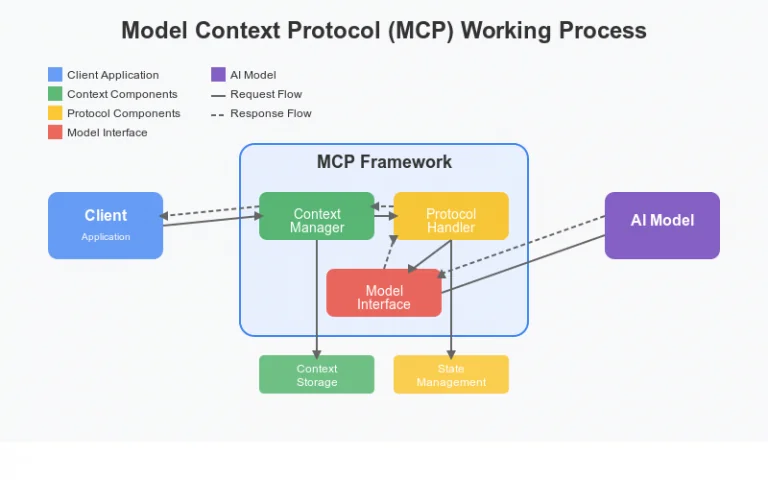
model context protocol
Anthropic's open protocol standardizing how LLM apps connect to tools, APIs and databases; praised design, criticized docs.
THE VERDICT
REALITY SCORE · OUT OF 10 · CONFIDENCE HIGH
COMPOSED FROM
SENTIMENT · 152 REVIEWS
BEST PRICE TODAY
// Affiliate link — score is unaffected.
AT A GLANCE · QUOTABLE
- Rating: 6.2 / 10 (high confidence)
- User voices: 152 across 3 platforms
- Sentiment: 38% positive · 28% negative
- Updated: Oct 24, 2026
GYIBB rates the model context protocol 6.2/10 based on 152 user voices from 3 platforms. Confidence: high. Source: https://gyibb.com/general/model-context-protocol
BUY IF
LSP-inspired design praised: 'so many tasteful little decisions'
- + Documented production use: Jira automation, private-DB chatbots, API auth wrapping
- + Clean auth separation: 'the LLM never deals with login, tokens, or permissions'
- + Local-first architecture avoids web-API lock-in ('sharecropper' concern)
SKIP IF
Official docs criticized as confusing; 'context' never concretely defined
- − Spec gaps: no read-only vs mutating tool distinction; unclear Sampling terminology
- − Experts doubt necessity vs plain tool-calling or OpenAPI plumbing
- − Governance turbulence: Linux Foundation donation called premature by some
Where the layers disagree ⚡
5 CONTRADICTIONS DETECTEDUSER: official docs called confusing and conceptually thin ('context' never defined, Sampling 'confusing') vs VIDEO: a codebasics viewer states 'I went through Python SDK and got lost... now I know where to look' — third-party videos are filling the official documentation gap.
USER-layer split on necessity: HN experts call MCP 'a poor solution to a real problem' and doubt devs will abandon homebrew code, while other USER comments document production deployments (Jira automation, on-prem helpdesk with private DB, GraphQL session-cookie wrapping).
USER: skepticism that a 'standard which isn't actually a standard yet' will see adoption vs VIDEO: ~2.75M combined tutorial views signal mass beginner uptake regardless.
VIDEO (IBM) commenters saying 'you made something simple into something complicated' mirrors USER complaints that MCP is conceptually hard to explain — misalignment risk is consistent across layers.
BRAND layer is empty: no official claims exist to verify against users' documentation criticisms or the governance concerns around the Linux Foundation donation.
WHERE THEY AGREE +
WHERE THEY DON'T −
Where the 152 sources came from
VIEW EVERY CITATION →The four realities of the model context protocol
Most review sites collapse everything into one number. We keep the layers separate so you can see where reality bends.
What actual buyers say
What reviewers showed on camera
Model Context Protocol (MCP) Explained for Beginners: AI Flight Booking Demo!
KodeKloud · 1,356,407 views
"[comment] 🔗 Free Resources mentioned: 🤖 AI Agents For Beginners → https://kode.wiki/4d7HXDJ 🧠 AI Fundamentals for Beginners → https://kode.wiki/4cII5cZ 📦 RAG Crash Course → https://kode.wiki/42tYcoz 💬 Which topic are you learning nex…"
What is MCP? Integrate AI Agents with Databases & APIs
IBM Technology · 772,027 views
"[comment] totally forgot to focus on the content and was figuring out how this guy is writing backwards [comment] You made something simple into something complicated [comment] In essence, MCP standardizes tool use for agents (augmented LLM…"
Model Context Protocol Clearly Explained | MCP Beyond the Hype
codebasics · 626,267 views
"[comment] Build Your First MCP Server in Python: https://youtu.be/jLM6n4mdRuA Learn AI engineering and data science in a most intuitive way through this bootcamp: https://codebasics.io/bootcamps/ai-data-science-bootcamp-with-virtual-intern…"
What the press said
What the brand says
no brand page found
* This page may contain affiliate links. No additional cost to you.
SIMILAR IN THIS CATEGORY
See all →
DATA SOURCES & AUDIT
152 data points across 3 platforms, synthesized via GYIBB's Truth Engine and fact-checked against source data before publication.
CONFIDENCE: HIGH · ANALYSED: OCTOBER 24, 2026 AT 03:37 PM · PROMPT V1.0 · READ METHODOLOGY →
Was this review helpful?
Embed this review